



Jack Guez
/
AFP via Getty Images
Israel is holding a general election this week after years of war. For many Israelis, shaken by the Oct. 7, 2023, attacks and years of war, it is the most consequential in decades.


-
 The Las Cruces police and fire departments are sharing safety tips and taking steps to help community members avoid Halloween hazards.
 -
 Republican Samuel Kane answers questions about his role if elected attorney general, the office's responsibilities, and his priorities.
 -
 Kurt Johnson, General Manager and Executive Editor of the Las Cruces Bulletin, highlights local sports stories.
 -
 Nick Seibel, editor and publisher of the Silver City Daily Press, covers top stories each week in the Silver City Report. This week, he talks about two new cases of New World screwworm in Grant County, ethics issues at Cobre Consolidated School District and more.
 -
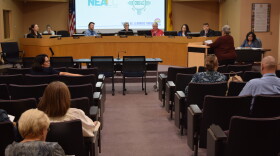 The Las Cruces Public Schools Board of Education voted to write an amended lease with Alma d’Arte after the charter school defaulted on its current one.


-
 Prosecutors said Friday they had not yet decided whether to pursue another indictment.
 -
 Research by the Institute for Energy Economics and Financial Analysis showed the number of wells likely to become orphans is growing faster than the state can plug and remediate its existing inventory.
 -
 The Native American Rights Fund report used federal data from the past three general elections to show rejected voter registration applications increased by an average of 200% in counties where Native Americans make up at least a quarter of the population.
 -
 Ramos was released from custody during a news conference outside the county jail Saturday, with the crowd erupting in cheers.


-
 The recent Meta settlement includes a clause banning "cosmetic procedure filters" for teens. But defining what constitutes an extreme makeover isn't easy.
 -
 In a sign of the potentially dire midterm political environment, Republicans have spent millions of dollars playing defense in Arkansas, one of the most conservative states in the country.
 -
 The U.S. has no national law for paid parental leave. But in states that do, more dads are using the benefit, sometimes more than moms. The change comes as Americans say having kids is unaffordable.
 -
 As they look to win the Senate, Democrats are hoping that independent candidates in Nebraska and Montana can help them topple Republicans in a part of the country where their own brand is hurting.
 -
 While protests in France have claimed most international attention, large demonstrations also rocked many European cities Saturday from Milan to Rome to Madrid, Lisbon and Tirana.


October 23, 2026 - PBS News Hour full episode

News Wrap: White House says Melania Trump brokered localized ceasefire deal in Oleshky

'There's babies in there': Oregon father describes stopping school shooter

Why 'You Can See Everything' is captivating audiences

Brazil's high-stakes presidential runoff could reshape country's future


