


Last month, a federal advisory council advanced a proposal that could change Section 106 of the National Historic Preservation Act. It would not only alter the process of how historic sites are preserved, but who gets to decide which ones are worth preserving.
According to the National Trust for Historic Preservation, Section 106 requires federal undertakings to check if there are any historic resources that may be damaged by a project. If there are, then an agreement must be reached with involved parties on how best to reduce that damage.
Recent recommended changes would eliminate this process of consulting with local communities and instead, leave it up to whoever is responsible for the project to determine what is historic and what is not.
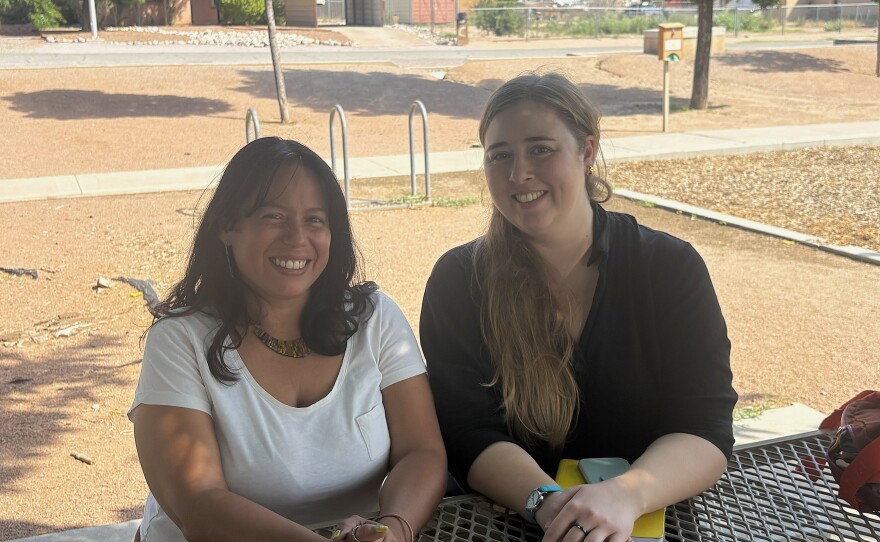
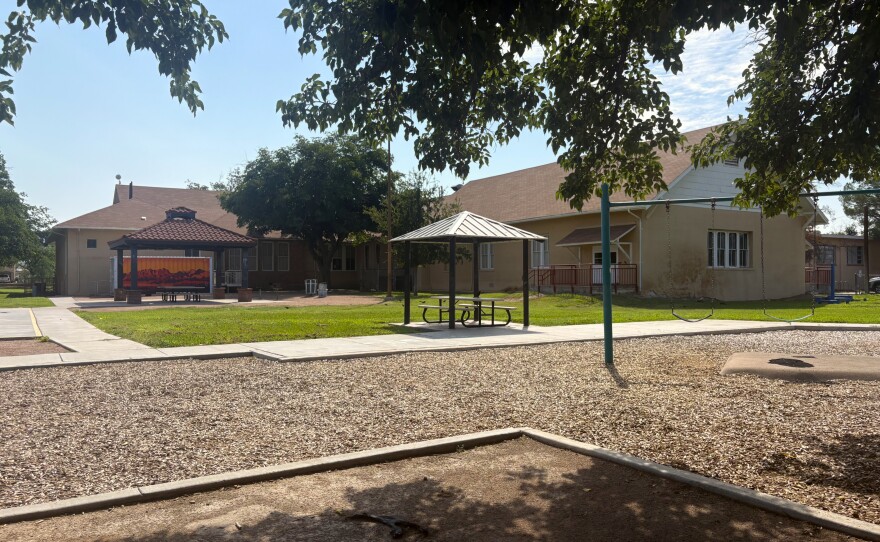
Caitlin Beesley, the historic preservation specialist for the City of Las Cruces, and Liana Aguirre, the historic preservation specialist for the Town of Mesilla, joined me outside of what was formerly Mesilla Park Public School. The building has been around since 1907 and was registered as historic in 2015.
If the proposed changes to Section 106 are enacted, sites such as this one could be under threat, Beesley said.
“It's hard to get people to understand that, like, ‘What? You mean this crummy old building is historic? This building isn't particularly attractive. It’s utilitarian. What do you mean it's historic?’ Those are hard things to grasp,” she said.
Should a project impact a site that’s not officially registered but is argued to be historic, federal and state agencies must confirm eligibility through qualifications listed on the National Register of Historic Places website.
Aguirre said there’s one type of historic site which is commonly overlooked.
“A lot of indigenous people celebrated through prayer, meditation, you know, around these landscapes that don't have built structures, that are just purely spaces of connection, and – mountains, rivers – these places are also under threat,” she said.
Take a look at New Mexico’s Chaco Canyon, for example. Under the current Section 106 guidelines, federally recognized tribal nations must be included in the review process to advocate for these kinds of spaces. However, despite its indigenous and ancestral ties, the Trump administration is pushing to extract oil, gas and minerals from the region.
“That's been, kind of, one of the biggest pushbacks for some of these Section 106 debates," Beesley said. "Companies are tired of having to go through this process where they consult with tribal nations, where they consult with local communities about whether these situations are impactful to them."
Similar cultural and archeological concerns were expressed against the building of Project Jupiter.
According to Source New Mexico, The Green Chile Project is a proposed $60 million gas pipeline designed to run from El Paso to the Project Jupiter site in Santa Teresa. Because this undertaking requires federal permits, it must go through the Section 106 review process.
Project Jupiter failed to get documented confirmation from the New Mexico State Historic Preservation Office that no historic land would be impacted by the construction of the pipeline.
This, along with other things, led to a state Supreme Court ruling to put a pause on some of Project Jupiter’s development.
For people who view Section 106 as a roadblock to progress, Beesley had one quote to clarify the overarching goal of preservation.
“At its best, preservation engages the past in a conversation with the present over a mutual concern for the future.”— William Murtagh, the first “keeper of the records” for the National Register of Historic Places.
For a place like southern New Mexico with its rich culture, Aguirre said this conversation is important.
“And the big story is, who’s going to tell your history?” Aguirre said.
Both the City of Las Cruces and the Town of Mesilla have taken an extra step to keep this conversation alive by becoming Certified Local Governments (CLGs). They are joined by 10 others in the state, not including Santa Teresa.
To receive this qualification, a town must show their commitment to historic preservation and have systems in place to uphold this commitment. What would usually be done at the state level is streamlined to a local level, making tools for preservation more accessible in times of rapid development. Each CLG is also given access to a pool of state money specifically reserved for local preservation. Aguirre says there are already grant-funded projects underway.
“A building is, it's much more than a building," Aguirre said. "It's a story. It's a connection to our past. This is why it's important to keep and maintain, because it will tell the stories for generations to come."
More information on the proposed changes to Section 106 and how to get involved in local preservation is available at https://savingplaces.org.
Serena Johnson is a fellow with the New Mexico Local News Fellowships and Internships Program, which places emerging journalists in newsrooms across New Mexico. Learn more at www.newmexicolocalnewsfellowships.org.

