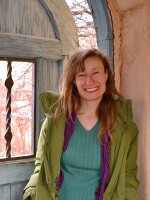
Dr. Hamid Mansouri Rad, an Iranian living in Las Cruces, talked to Susan Morée about his family still in Iran and what's it like to watch the conflict from afar. This is a transcript of their conversation.
Susan Morée:
So Hamid, you experienced the 1979 revolution in Iran. Tell me what you're feeling now that you see the conflict happening from Las Cruces.
Dr. Hamid Mansouri Rad:
So it's a very strange feeling. I feel like I'm very connected to people who are part of this struggle in Iran, and I feel very sad that I'm not close to them. I can't be of any help.
Susan Morée:
You served in the military in the Persian Gulf War. You must have a real strong sense of what it must be like to be in the middle of a military conflict there. What do you feel like you're seeing from your television in Las Cruces?
Dr. Hamid Mansouri Rad:
So I was a petty officer with the Iranian Navy back in the ‘80s. And I remember that when I was in Persian Gulf, they would send us to missions in different islands in protecting the oil fields from Iraqi bombings and attacks. And I remember I never felt scared. You know, we had information. I felt like, you know, I had access to the air defense system, although, you know, it was scary. I never felt scared, right? But I remember a couple of times I took off to go see my parents in Tehran. And while I was in Tehran, Iraqis were bombing Tehran. I was scared to death. I wasn't scared in the front lines. I was scared in the city because you never know where they're hitting. And because of the because of the nature of the city. If a bomb explodes like 10 miles away, because it's in the city, you feel like it's a mile away. In Tehran and other cities, they must be very scared. However, from, you know, put it in the context of people's struggles in Iran in the past few decades that culminated into the massacre of protesters in Iran a couple of months ago. They were begging for the U.S. to intervene, right? So, I see videos where people are watching the bombings and are celebrating. They are being bombed. Actually, I have a video clip of my own neighborhood being destroyed. I mean, I have a feeling that most probably my house, my mom's house, my parents' house, it's very possible it hasn't survived because it's a very old building. And I worry that because of the bombings around our neighborhood, just the amount of shaking that it does to a building, I have a feeling it might not have survived, but I don't know because I have no communication with my nephew or my sister who lives there. So these are the feelings right now.
Susan Morée:
That must be really stressful to not be able to connect with family who are there. How are you handling that?
Dr. Hamid Mansouri Rad:
You know, I wake up at night thinking what they must be going through right now. So right after work, we are glued to the internet, news about Tehran, news about Iran, what's going on?
Susan Morée:
What are you hearing from other Iranians who are living in New Mexico? Is there any conversation going on about this conflict, and is there any consensus that you can relay?
Dr. Hamid Mansouri Rad:
So I know that everybody is in this very strange situation where they are happy that the government that, you know, recently killed thousands of unarmed protesters is feeling some heat by the United States. They're happy about that. And on the other side, they're also worried about their families, you know, and, you know, their well-being, of course. So I know there is celebration. They are celebrating the fact that, you know, the government of Iran is not as strong as it was before. And it's like their payback. That's how they feel that this is what they deserve right now.