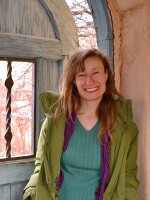
Col. Andrew R. Morgan currently services as the senior commander of White Sands Missile Range but he is both a NASA astronaut who has traveled to space and a former emergency physician with the U.S. Army Special Operations. Morgan will be speaking about leadership at the New Mexico Museum of Space History on Friday. He spoke with Susan Morée about what it's like to be in space and why he's chosen such a remarkable career. This is a transcript of their conversation.
Susan Morée:
So, Colonel Morgan, you were an emergency physician with the U.S. Army Special Operations Unit, and you went to Afghanistan and Iraq. And you also were an astronaut, or you are an astronaut. Tell us about that journey. That sounds pretty remarkable.
Colonel Andrew R. Morgan:
Yes, I think that the common thread in my career is that I've been a lifelong servant to this country. I believe strongly in service, and I started that journey as a cadet at West Point, graduated, became an officer, went on to medical school, and then served as a medical doctor in special operations before then applying to become an astronaut and selected in the class of 2013, and then spent over a decade at NASA before returning then to the Army to continue to serve and serve as a leader in command.
Susan Morée:
Do you have any special memories about going into space? That must have been an incredible experience.
Colonel Andrew R. Morgan:
It was an honor of a lifetime. You build lifelong friends, of course, where you get to know the cohort of astronauts that you're training with initially, with the class that you're selected with. You train together for two years before then you go on to be assigned to a very specific mission to fly in space, and then you build those bonds again with the crew that you fly in space with. And while I was in space, I had a great crew and we had a lot of great memories together. I lived and worked on the International Space Station for nine months, from July 2019 until April of 2020. So it was a long period of time. We were up there for all the holidays, Thanksgiving, Christmas, New Year's, and I have a lot of great memories of sharing those holidays with both my Russian and Italian crewmates and American crewmates on board the International Space Station sharing food. And it was just a great memory to be up there. If you can't be with family, be with crewmates.
Susan Morée:
And it sounds like you were up there at the very beginning of the pandemic as well. That must have been a strange experience.
Colonel Andrew R. Morgan:
Yes, we watched the whole pandemic begin to play out in the early part of 2020. And so it was kind of the concept of quarantine, it’s very common at NASA. We always use quarantine to prevent infectious disease from infecting the International Space Station. And then when we learned that the rest of the world was doing it too, it was quite surreal. We returned to a very different planet than we left.
Susan Morée:
You got to walk in space, I understand. Can you talk about what that was like?
Colonel Andrew R. Morgan:
Yeah, I conducted sevenspacewalks on board the station. They were all for different purposes, but all for the purpose of improving the exterior of the station. So, there's a lot of work that we need to do to maintain it. In one case, I was out changing batteries. In another case, I was out improving a scientific instrument that was out there. That is the one thing that we spend the most time training for because it's the most dangerous thing aside from launching and landing, launching on a rocket and landing in a capsule. Spacewalking is the most risky thing we do, and therefore, we spend a proportional amount of time preparing for that. So it's very high stakes, but it's also the most rewarding and some of the hardest work that we do. So every time that I finished the spacewalk, I came in with a great sense of accomplishment.
Susan Morée:
How do you keep from getting vertigo when you're in the middle of space like that?
Colonel Andrew R. Morgan:
Your inner ear becomes very adapted to the microgravity environment within a day or two of arriving. It's initially disorienting, but then within a couple of days, and certainly after I had been there for a couple of weeks, it was just like, it becomes the new normal.
Susan Morée:
You're going to be speaking at the New Mexico Museum of Space [History] about leadership. Can you give us a preview of any special tips you're going to talk about?
Colonel Andrew R. Morgan:
Well, my current role as the senior commander of White Sands Missile Range, the Army has entrusted me with the stewardship of a very large military installation in the southern part of New Mexico, a significant part of our state. We call it America's Range because it's been the site of many firsts. We've been the first to test many things, everything from the first atomic detonation at the Trinity site to bringing the V-2 rocket after World War II and reverse engineering that. And really the origins of our space program are right there at White Sands Missile Range in southern New Mexico. And so I like to make that connection wherever I can between my career as an astronaut and an army officer and now leading a crown jewel of New Mexico military installation where the origin of our space program originated. And so I'll be at the New Mexico Museum of Space History talking about my experience, my career, but also the significance of White Sands Missile Range in our space history.
Susan Morée:
Artemis II just traveled around the moon. What was it like for you to watch that from the ground?
Colonel Andrew R. Morgan:
Well, it was deeply personal. My wife and I both traveled out to the East Coast to Kennedy Space Center to watch the launch. We were there with the crew members' families because all four crew members are very good friends of ours, and I mean very good friends. Two of them I was selected in the same class with. And one of them, Christina Koch, I did two of my spacewalks with and lived and worked on board the International Space Station with her for seven months. So it was deeply, deeply personal, I was very invested in the success of this mission. As it turned out, the entire country and the entire world were captivated, I think, more than I even expected, and I was just immensely proud of them. I would have been proud of them in any circumstance, but just to see the entire world gathered behind them made us even more proud of them. I was on pins and needles throughout the entire mission. And then when they returned back to Earth, just a sigh of relief. And I've talked to the crew as recently as in the last couple of days since their return. So just so proud of them and where NASA is headed next to return back to the moon and then eventually to the surface of the moon for a permanent presence. That will be a proud moment for our nation and for the entire world.
Susan Morée:
Would you try to go back into space again if you could?
Colonel Andrew R. Morgan:
I wouldn't be averse to the idea, but I made the conscious decision to leave NASA, to continue to lead, and to continue my career in the Army. And so right now, I feel like that's my calling to continue to advance and be a senior leader in the U.S. Army.
Susan Morée:
One last quirky question. I've read that astronauts, when they go into space, grow a couple of inches. Did you grow a few inches while you were up in space?
Colonel Andrew R. Morgan:
Yes, well, the constant effects of gravity, your back muscles and spine do tend to elongate. And so that occurs with every astronaut to varying degrees. But within a couple of hours of returning to Earth, that compression returns your back to your normal height. So I'm no taller now than I was before I launched.
Susan Morée:
Alright. Is there anything I haven't asked you that you think I should have?
Colonel Andrew R. Morgan:
I'm just a proud leader of White Sands Missile Range, America's Range. We're the first to test and we’re critical to New Mexico and our national defense. So I'll be very proud to speak at the New Mexico Museum of Space History this week.
Susan Morée:
Alright. Thanks so much.
Colonel Andrew R. Morgan:
Alright. Thank you, Susan.