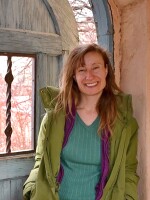
Susan Morée talks to Krysta Montez, from La Piñon: Sexual Assault Recovery Services, about a new sexual assault awareness campaign as part of its efforts to help survivors in their healing process. Here is the transcript of their conversation.
Susan Morée:
Krysta, La Piñon has launched a new campaign. Tell us about it.
Krysta Montez:
We launched a new campaign called Healing is Happening, and this awareness campaign was designed to break stigma, support survivors, and remind our community that healing is possible.
Susan Morée:
Tell us why that's important.
Krysta Montez:
Healing is not linear, and it's a continuous journey at a pace that works for survivors, and La Piñon gives hope that healing is happening today and tomorrow. And so, when we do this and we come together as a community, we give hope and healing to survivors along with our community.
Susan Morée:
New Mexico has a high rate of sexual assault. Can you talk about that and how does that affect your organization?
Krysta Montez:
Yes, New Mexico has a high rate of sexual assault, and the biggest thing is that we at LaPiñonare able to provide services to survivors in our community to be able to combat that issue.
Susan Morée:
And what kind of services? Can you talk a little bit more in depth about what those services entail? What is it that you're able to provide survivors?
Krysta Montez:
Yeah, absolutely. So, we at La Piñon, offer services. So, we are the Sexual Assault Recovery Services for Southwestern New Mexico, along with the Children's Advocacy Center. So, we work with survivors of sexual assault and child abuse in Doña Ana County, Luna County, Hidalgo, and Sierra County. And everything we do is free, whether it's something that happened recently or 100 years ago. And we do this 24/7, 365 days a year with the community of support and healing through comprehensive services and advocacy along with prevention education. So, what that includes as well is, having our crisis intervention line available for survivors to call 24-hours a day to get service and help. We're also able to provide advocacy as well. We also have a SANE [Sexual Assault Nurse Examiner]program where we're able to provide medical care. And then we also have therapeutic counseling, again, free of charge, not just to the survivor, but to their family as well. And of course, our prevention program where we're talking about the issues and actually working to actively prevent sexual violence and child abuse in our community.
Susan Morée:
Your new program is intended to help reduce stigma. Can you talk about why survivors wind up with such feelings of shame and stigma?
Krysta Montez:
So I think, you know, the number one reason why survivors don't come forward or report is, you know, the fear of not being believed and feeling supported. And so, you know, that goes back to the stigma around talking about the issue of sexual violence or child abuse. And so the goal of our campaign is, again, to reduce that stigma. And when we talk about the issues, we bring light to the issues, we're able to work through that.
Susan Morée:
Once survivors are able to start talking about it and addressing the issue, does that help with the healing process?
Krysta Montez:
Oh yeah, most definitely. You know, when we bring awareness,a big part of prevention isbreaking the stigma as well as community connectedness. When we're able to connect community around the issue and the community gives that hope and healing to survivors, then they're able to come forward and talk about it and feel safe to do so.
Susan Morée:
And you mentioned sometimes people wait a really long period of time before they do come forward. Can you talk about that? Is that a common occurrence?
Krysta Montez:
Yes, and, you know, a big thing is that, you know, we want to make sure that we're taking a victim-centered approach, meaning that we want survivors to come forward when they're ready to come forward, and keeping in mind that telling these stories may not be easy, but hope and healing is possible, and we're here to advocate for them when they're ready to come forward. We encourage people to actively participate with the Healing Is Happening campaign, local leaders, partners, donors, and, of course, our community. And when we talk about it, we learn about prevention, we share our resources, we support survivors, and we donate to support survivors, and, of course, healing can continue to happen.
Susan Morée:
All right. Well, thank you so much, Krysta, for taking the time to talk to me.
Krysta Montez:
Yeah, absolutely.